
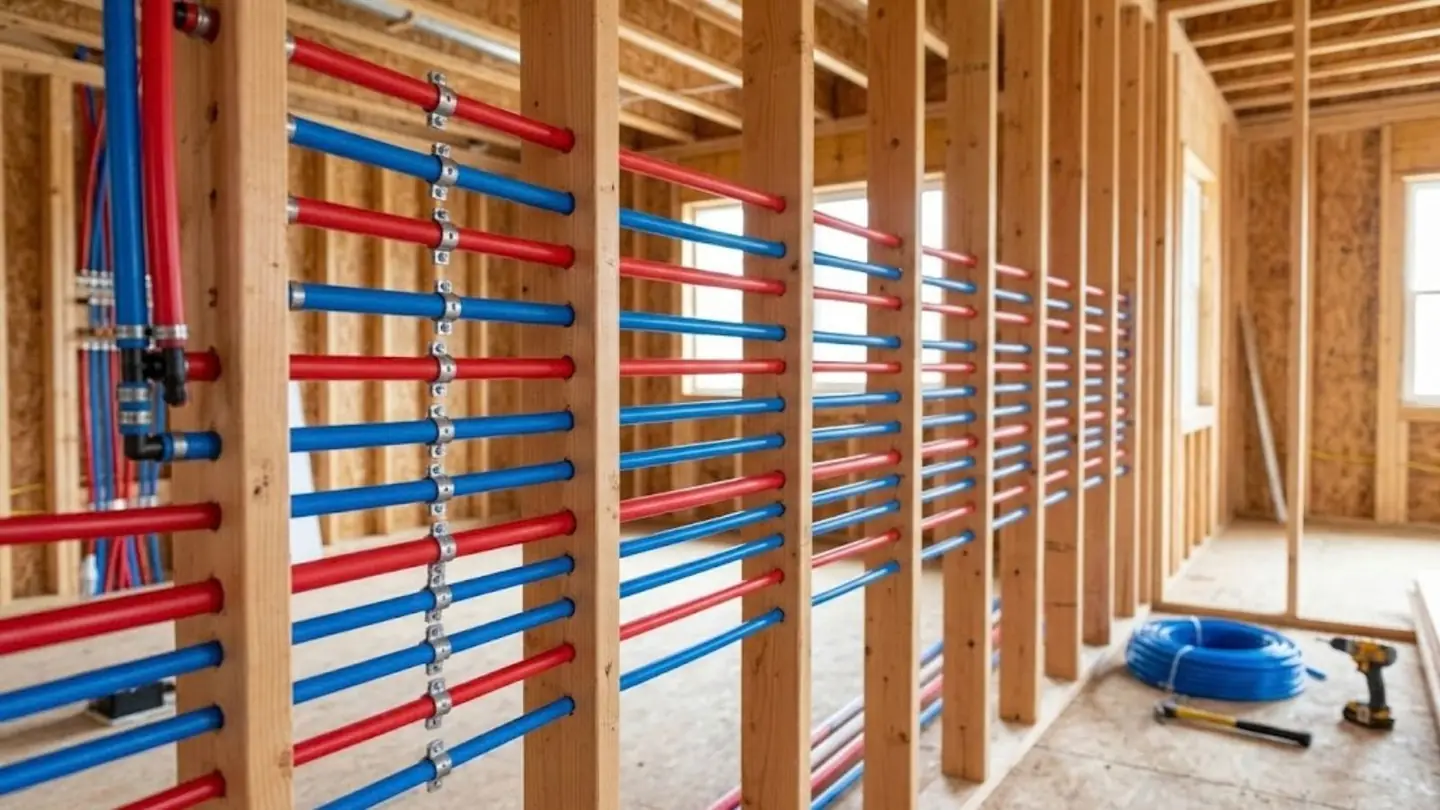
Signs your home needs repiping
A single leak does not mean a repipe. A pattern of problems does.
- Pinhole leaks that keep appearing in different places.
- Rust-colored or metallic-tasting water when the tap has been off.
- Low pressure that cleaning does not fix.
- Galvanized steel pipe, which corrodes from the inside over decades.
- Visible green or white crust on copper joints.
- Repeated repairs on the same system.
Repeated leaks or rusty water? Call to book an assessment.
Call (609) 547-1417Pipe material choices
| Material | Strengths | Trade-offs |
|---|---|---|
| PEX | Flexible, quick to run through walls, resists freeze splitting better than rigid pipe | Not for outdoor or UV exposure, needs correct fittings. |
| Copper | Long track record, durable, familiar to inspectors | Higher material cost, can pit in some water. |
| CPVC | Lower cost, rigid, no corrosion | Can become brittle with age and needs support. |
We recommend a material based on your house, your water and what you want to spend, and we explain why. There is no single right answer for every home.
How a repipe is done
- Assess. The plumber inspects the pipe, tests pressure and locates access points.
- Plan. You get a written scope, a schedule and a clear price before any work starts.
- Install. New lines are run through walls, floors or the basement, with as few openings as possible.
- Test. Pressure and flow are tested, and the old pipe is capped or removed.
- Restore. Access holes are patched. Painting and finish repair may be separate trades.
The duration depends on house size, access and how much drywall has to be opened. We give a written schedule, and we agree on how and when water will be off before work starts.
Questions about your situation? Call the 24/7 line.
Call (609) 547-1417Partial repipe or whole house
Sometimes only one section needs replacing. A failed run to a bathroom can be rerouted without touching the rest. A whole-house repipe makes sense when the pipe is the same age and material throughout and is failing in several places.
Ask for both options in writing. A partial repipe costs less now and may be fine for years, but it leaves old pipe elsewhere. A full repipe costs more and is done once. For a single failed line, see burst pipe repair. For the line from the street, see water line repair.
Why old pipe fails
Galvanized steel is zinc-coated iron, and the coating wears away over decades. Rust forms inside, narrows the pipe and sheds flakes that clog aerators. That is why pressure drops long before a pipe leaks. Copper fails differently. Thin-walled lines can pit from the inside, especially where water chemistry or flow speed is hard on them, and a pinhole forms with no warning.
Neither failure is fixed by a patch for long. Each repair stresses the next weak joint. If you have fixed two or three leaks in a few years, ask the plumber to inspect a cut-out section of pipe. Seeing the inside tells you more than any estimate of age.
Living through a repipe
Water is shut off for part of each working day, and the plumber tells you the hours ahead of time. Keep a few gallons for drinking and toilet flushes. Clear the areas where walls will be opened, and cover furniture, because drywall dust spreads.
Ask who patches the drywall and who paints. Many plumbers leave a clean, patch-ready opening and hand off finishing to a drywall trade. A written scope should say which it is.
What affects the cost
Repiping is priced on the number of fixtures, the size and layout of the house, the pipe material, the amount of wall access and permit needs. Finished basements, plaster walls and multi-story homes take longer. We do not post figures here. A clear price is given before work starts.
Repiping an older Trenton house
Trenton Water Works reports moderately hard water at 83.2 parts per million, and the city has a mix of housing from historic districts such as Mill Hill to later construction. Homes with galvanized steel can lose flow as scale builds up inside. A look at the pipe tells you far more than the age of the house.
Permit and inspection rules apply to repiping. The City's Division of Technical Services issues plumbing permits, and requirements differ by property. We ask the department what applies. For work in Lawrence Township, the process is handled through that township.
Source note: facts above are according to Trenton Water Works 2022 Consumer Confidence Report. City of Trenton inspections page.
Repiping questions
How do I know if I have galvanized pipe?
Galvanized pipe is gray, threaded and attracts a magnet. Copper is reddish-brown. Plastic is white, cream or colored. A plumber can confirm in a minute.
Can a repipe be scheduled around my timeline?
Yes. A full repipe is planned work, so dates are set with you. For a single failed line, see burst pipe repair.
Will I have to leave my home during a repipe?
Often no, but water will be off for part of each day. The plumber describes the schedule in advance.
Will repiping fix low water pressure?
If the cause is corroded interior pipe, yes. If the cause is the service line or a valve, no. The plumber tests first.
Is PEX safe for drinking water?
PEX made for potable water is approved by plumbing codes. The plumber uses the correct type and fittings.