
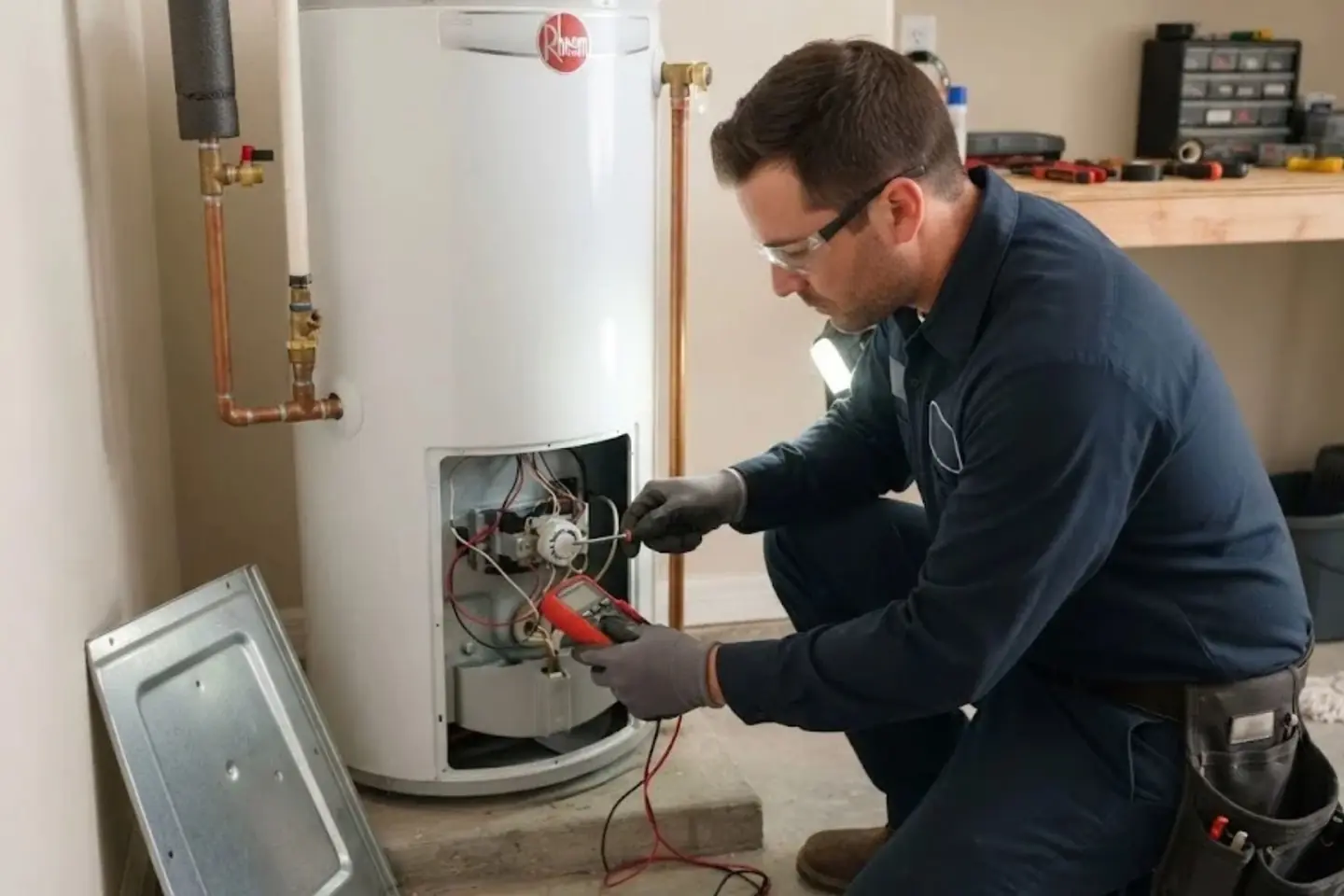
What a thermocouple does
A thermocouple is a small metal probe that sits in the pilot flame of a gas water heater. Heat from the flame makes it produce a tiny electrical current. That current holds the gas valve open. If the flame goes out, the current stops, and the valve closes so gas cannot leak into the room.
That makes it a safety part, not just a convenience. When it wears out, it stops producing enough current, and the valve shuts even though the pilot is burning. The result is a heater that will not stay lit.
Signs the thermocouple has failed
- The pilot lights, but goes out as soon as you release the control knob.
- The pilot burns for a while, then goes out on its own.
- The flame is weak, yellow or lifts away from the probe.
- The probe tip looks bent, sooty or burned through.
- You have no hot water, and the pilot assembly is cold.
These signs can also come from a dirty pilot orifice or a draft. A thermocouple is cheap and often fails first, but it is worth ruling out the other causes before you spend money.
What to check before you replace it
- Look at the flame. A healthy pilot flame is steady and blue, and the tip of the thermocouple sits in the hottest part of it.
- Check for drafts. A gust from a basement window or a vent can blow the pilot out, so check for open windows and exhaust fans.
- Check the connection. A loose fitting at the gas valve reduces the signal. Snug it by hand, then a quarter turn with a wrench.
- Check for soot. A pilot orifice clogged with debris gives a weak flame. A pro can clean it safely.
- Test the heater on a different day. If it fails only in cold weather, a draft or a gas supply issue is likelier.
Thermocouple, thermopile or flame sensor
Not every heater has a thermocouple. Older standing-pilot heaters use one. Some use a thermopile, which makes more current to run a control. Newer units with electronic ignition use a flame sensor and an igniter instead of a standing pilot.
Look at the label or the manual before buying a part. The wrong part may fit the fitting but not give the right signal. A plumber can identify the heater type by its model number.
Safety rules that matter
- If you smell gas, leave the building. Call your gas utility or 911 from outside. Do not call a plumber first.
- Never bypass a thermocouple or hold a valve open to keep the pilot burning.
- Let the burner cool and shut off the gas control before you touch any part.
- Follow the lighting instructions on the label for your heater.
- If the pilot orifice or burner area is dirty, call a plumber and do not clean it with a tool.
Pilot will not stay lit? Call the 24/7 line.
Call (609) 547-1417When to call a plumber
Replacing a thermocouple is a small repair, but it involves gas, so it is a reasonable job for a licensed plumber. A plumber also checks the burner, the venting and the flue while the unit is open. A heater that has failed more than once, or that shows soot or rust, may be ready for replacement.
If you want a hands-off fix, our water heater repair page explains what the visit involves. If the heater is more than about 10 to 12 years old, see water heater replacement.
What a professional replacement visit includes
A plumber does more than swap the probe. The visit starts with a look at the burner, the pilot assembly and the flue, since a weak flame or a blocked vent can destroy a new thermocouple in a few weeks.
- Inspect the pilot, burner and the gas control valve.
- Replace the thermocouple with the correct part for your valve.
- Check the draft at the vent and the clearance around the heater.
- Relight the pilot and confirm a steady blue flame.
- Test that the gas valve stays open and that the burner lights on demand.
If the visit shows rust at the base, a leaking tank or a heater well past its expected life, the plumber will tell you plainly. Replacing a part on a failing tank is rarely worth it.
Other reasons a gas heater has no hot water
A bad thermocouple is common, but not the only cause. A gas control valve can fail, a thermostat can stick, and a burner can clog with rust flakes. A heater that was never lit after a gas shutoff, or that has a closed supply valve, shows the same symptom.
Check the simple things first. Look at the gas shutoff valve on the supply line, which should be in line with the pipe. Check that the thermostat is set above the lowest mark. Then check whether other gas appliances work. If they do not, the gas supply itself is the issue, and the gas utility is the right call.
Anyone who works on gas piping or a gas appliance in New Jersey should hold the right license. The State Board of Examiners of Master Plumbers licenses master plumbers, and the NJ Division of Consumer Affairs runs a public license verification system. Check a license before a plumber touches your heater.
Trenton plumbing permits are issued by the City's Division of Technical Services. Replacing a single part may not need one, but we could not confirm that from the department's page. Ask the department if you are unsure, and we will ask for you.
Winters here average January lows near 24 degrees Fahrenheit. A heater in a cold basement corner faces more draft and a higher chance of a blown-out pilot.
Trenton Water Works reported moderately hard water at 83.2 parts per million for 2021. Sediment from hard water collects at the bottom of a gas heater, where the burner sits. A yearly flush helps the burner and the tank.
Source note: facts above are according to NJ Division of Consumer Affairs, City of Trenton inspections page, TWW 2022 Consumer Confidence Report.
Need a plumber near you?
Our plumbers work from Trenton and also serve Lawrence Township and the nearby towns listed on our service area page. If this guide matches what you are seeing, our water heater repair page explains what a visit involves. A dispatcher answers the 24/7 line at any hour, and same-day appointments are offered when a plumber is available.
Ready to talk to a plumber? Call the 24/7 line.
Call (609) 547-1417Questions Trenton homeowners ask
How do I know if my thermocouple is bad?
If the pilot lights but goes out when you release the knob, the probe is likely worn. A bent or sooty tip is another sign.
Is it safe to replace a thermocouple myself?
It is a small part, but the work involves gas. A licensed plumber also checks the burner and venting. If you are not sure, call a pro.
Do I need a permit in Trenton to replace a thermocouple?
A single part swap may not need one. The City's Division of Technical Services issues plumbing permits, and we could not confirm the rule from its page, so ask the department.
Why does my pilot go out in winter?
Cold drafts in a basement can blow the pilot out. A thermocouple that is already weak fails faster in the cold.
How long does a thermocouple last?
There is no fixed number. They wear out slowly, and a pilot that keeps going out is the usual sign.