Stop flushing first
If the bowl is full or rising, do not flush again. A second flush adds water to a bowl that cannot drain. Lift the tank lid, push the flapper down and close the supply valve behind the toilet if the water keeps rising.
Lay towels and keep people and pets away. Wear gloves, since the water may be contaminated.
What to try after the plunger
- Use the right plunger. A flange plunger, with a rubber fold that fits the drain, works better than a cup plunger.
- Seal and push gently. Push down slowly to avoid splashing, then pull up sharply.
- Add hot water and dish soap. Warm, not boiling, water and a squirt of dish soap can loosen some clogs. Boiling water can crack porcelain.
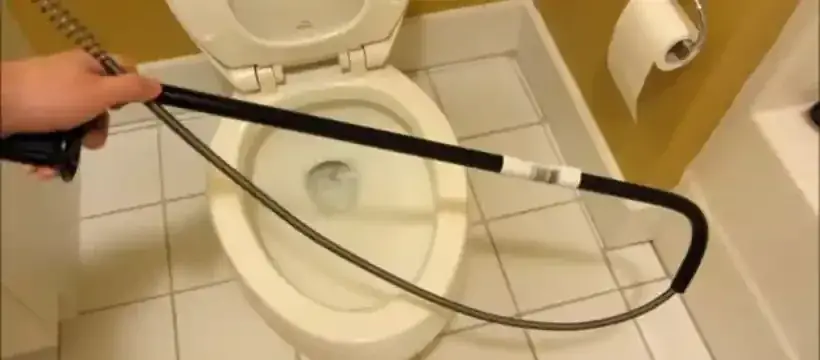
- Try a toilet auger. A closet auger reaches the trap and breaks or pulls out the clog.
- Stop if it keeps failing. More force does not help when the clog is further down.
Do not use chemical drain cleaner in a toilet. It can sit in the bowl, damage fittings and make the next step hazardous.
Signs the problem is not the toilet
- A tub or shower gurgles when you flush.
- Water backs up in a floor drain or a basement fixture.
- More than one toilet is slow.
- The clog returns within days of clearing.
- You hear gurgling in other drains when the toilet runs.
These signs point to the main line. Stop using water and call. See our drain cleaning and sewer line cleaning pages.
Toilet and drains both backing up? Call the 24/7 line.
Call (609) 547-1417Why toilets clog in the first place
Too much paper, wipes labeled flushable, toys and hygiene products are the common causes. Low-flow toilets also clog more if the drain line is slow or if mineral deposits have narrowed the rim jets. A toilet that clogs often is telling you something about the line.
If the toilet itself is old or has a weak flush, our toilet repair page covers fill valves, flappers and replacement.
What a plumber does that you cannot
A plumber has a longer auger, a camera and, when needed, equipment to clear the main. If the toilet has to come off to reach an object, the plumber also reseats it with a new wax ring. A camera inspection shows whether roots or a sag explain repeat clogs.
What should never go down a toilet
- Wipes, including those labeled flushable.
- Paper towels and tissues thicker than toilet paper.
- Cotton swabs and dental floss.
- Feminine products and diapers.
- Cat litter, even types marked flushable.
- Cooking grease and food scraps.
These items do not break down like toilet paper. They catch on a rough spot in the drain and build a clog over weeks. If your toilet seems to clog for no reason, check what is being flushed.
After the clog is cleared
Flush a few times and watch the bowl. It should empty with a strong swirl and refill quietly. If water rises slowly or the bowl gurgles, a partial clog remains, or the line has a problem.
Check the floor around the base for water. A toilet that was removed or forced can lose its seal, and a leak at the base can run unseen. If the toilet rocks, the wax ring or the bolts need attention. A plumber can reseat it and replace the ring.
How a toilet clears and why it clogs
A toilet flushes by siphon. Water from the tank rushes into the bowl, fills the trap and pulls the contents through the curved passage into the drain. A clog interrupts that siphon. If something blocks the trap, water cannot move and the bowl rises.
Most clogs are in the trap or just past it, which is why an auger works. A clog farther down, in the branch or the main, will not respond to a plunger or a closet auger. That is when a plumber's longer machine or camera is needed.
If the siphon seems weak even with a clear drain, mineral buildup in the rim jets may be the cause. Those small holes under the rim can be cleaned with a wire and a vinegar soak. A toilet that has a strong, quick flush is less likely to clog in the first place.
Trenton Water Works reported moderately hard water at 83.2 parts per million for 2021. Minerals collect around the rim jets of a toilet, which weakens the flush over time. A vinegar soak in the jets can help.
Ask your sewer utility where the public main begins and where the owner's responsibility ends. We could not confirm the arrangement for every Trenton street from a public source, so do not assume.
Older homes in neighborhoods such as Mill Hill and Chambersburg may have older drain materials, which can collect debris faster than newer plastic. A camera look gives you facts.
Source note: figures above are according to Trenton Water Works 2022 Consumer Confidence Report (2021 data).
Need a plumber near you?
Our plumbers work from Trenton and also serve Lawrence Township and the nearby towns listed on our service area page. If this guide matches what you are seeing, our toilet repair page explains what a visit involves. A dispatcher answers the 24/7 line at any hour, and same-day appointments are offered when a plumber is available.
Ready to talk to a plumber? Call the 24/7 line.
Call (609) 547-1417Questions Trenton homeowners ask
Why won't my plunger clear the toilet?
The clog may be past the trap, or the plunger may be the wrong type. A closet auger or a plumber is the next step.
Can I use boiling water on a clogged toilet?
No. It can crack porcelain. Use hot tap water with dish soap.
Is a clogged toilet an emergency?
If it overflows or the main line is backing up, yes. Call the 24/7 line.
Who maintains the sewer line in my Trenton neighborhood?
It depends on the address. Ask your sewer utility where its responsibility ends.
Why does my toilet clog and my tub gurgle?
That points to the main line. Stop using water and call.