
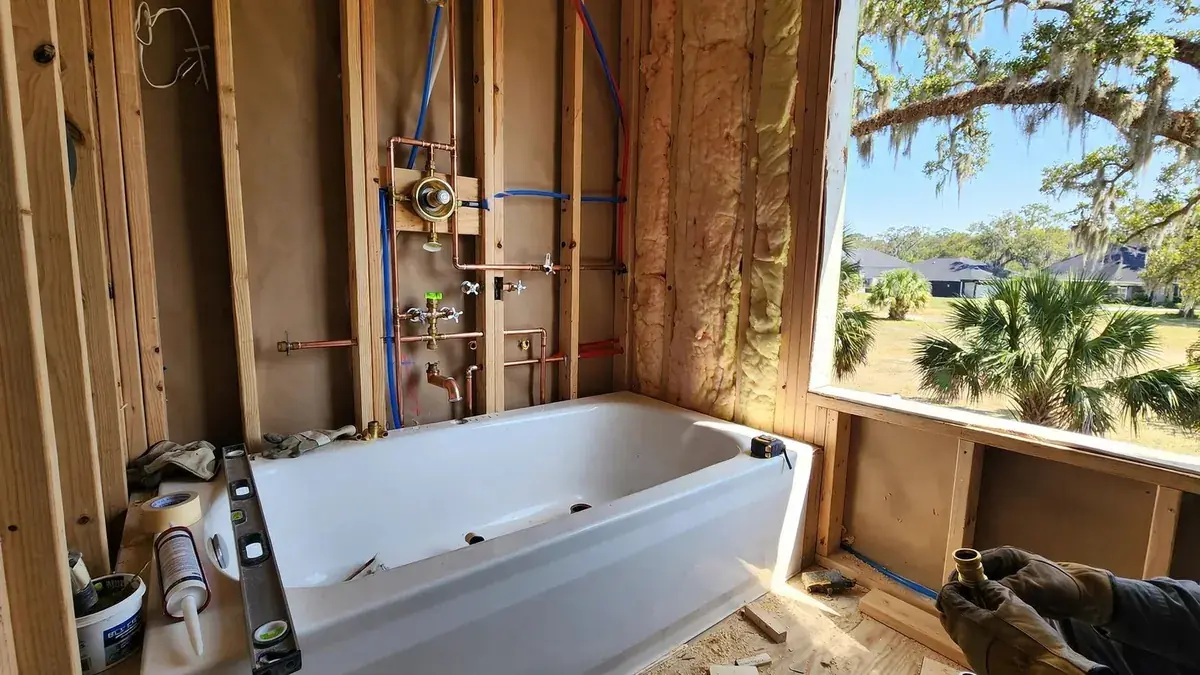
The parts of tub plumbing
A tub has a drain at the bottom, an overflow near the top and a trap beneath the floor. Water leaves through the drain and the overflow, passes through the trap and flows into a branch drain that connects to the house system. A vent lets air into the line so water drains quietly.
Supply plumbing is separate. A valve controls hot and cold water, and a spout or a showerhead delivers it. Each part must be accessible for service, which is why many tubs have an access panel.
Plan before you set the tub
- Confirm the drain location and rough-in dimensions for the tub model you chose.
- Check the floor framing, since a filled tub is heavy.
- Check the slope and size of the existing drain line.
- Decide where the vent connects and whether it can reach the roof or tie into an existing vent.
- Choose the valve type and mark the wall for access.
A tub with the wrong drain position forces you to cut the floor. Check the dimensions before the tub arrives.
Drain, trap and vent
Most tub drains use a 1.5 inch line with a trap. The trap holds water that blocks sewer gas, and the drain must slope toward the main line. The vent is what keeps the trap from siphoning dry.
Venting rules are a common reason an installation fails inspection. The code sets how far a trap can be from its vent and how the vent connects. In New Jersey, the plumbing subcode adopts the National Standard Plumbing Code, and a plumber checks the version in force before laying out the pipe.
Supply valve and spout
- Rough in the valve. The valve body is set at the right depth for the trim kit.
- Run supply lines. Hot and cold lines are connected, with shutoffs where required.
- Pressure test. The lines are tested before the wall is closed.
- Install trim. The handle, spout and showerhead are installed after the tile or panels go up.
Planning a bathroom project? Call to book a visit.
Call (609) 547-1417What can go wrong
- A drain that sits too high or low for the tub model.
- A missing or undersized vent, which makes the tub gurgle.
- A trap that cannot be reached for cleaning.
- No access to the valve, so a repair means opening the wall.
- A leak that goes unnoticed because the lines were never pressure tested.
Hidden leaks under a tub can run for months. If you see stains below a bathroom, see our leak detection page.
When to hire a plumber
Setting a drop-in tub into an existing rough-in is within reach for a handy homeowner. Moving the drain, adding a vent or running new supply lines is plumbing work that usually needs a permit and a pressure test. Our plumbing installation page describes the process, and our faucet and valve repair page covers valves that already exist.
Tub types and how they change the plumbing
An alcove tub sits against three walls, which makes plumbing access simple. A drop-in tub is set into a deck, and its drain and overflow must be connected before the deck goes on. A freestanding tub needs floor-mounted or wall-mounted supply, and a drain that lines up with the base.
A whirlpool tub adds a pump and an electrical circuit. The pump needs an access panel, and the circuit is typically protected by a ground-fault device. Electrical work for a whirlpool is separate from the plumbing, so plan for both trades.
Test before you close the wall
Fill the tub to the overflow and let it sit. Look at the drain and overflow connections underneath for drips. Then pull the plug and watch the drain run at full flow. A slow drain here is a venting or slope problem, and it is far easier to fix before tile.
Pressure test the supply lines with the valve in place. Keep the pressure on while you finish the wall, and check the gauge before you close it. A leak found at this stage costs a few minutes. A leak found after tile costs a wall.
Choosing the drain and overflow kit
The drain and overflow kit connects the tub to the trap. The common types are a trip lever, a pop-up and a toe-touch. The trip lever and pop-up use a linkage inside the overflow, which is the part that fails most often. A toe-touch drain has fewer moving parts.
Material matters too. Brass lasts longer than thin plastic and holds a seal better over years of hot water. The kit must match the tub, since drain openings and overflow heights differ between models. Check the instructions for the tub you bought.
Use a plumber's putty or a silicone sealant as the manufacturer directs. Tighten fittings by hand and a little more with a tool. Overtightening cracks plastic and strips threads. Fill the tub and test the drain before you move on.
The City of Trenton issues permits for building, plumbing, electrical and fire protection through the Division of Technical Services under the Construction Official. The office is at 319 East State Street, Trenton, NJ 08608, in the City Hall Annex. The City's page lists single-trade permits as issued within 48 hours.
The page lists the plumbing office at 609-989-3546 and inspections at 609-989-3550. Call before you start, because permit needs depend on the work.
New Jersey's plumbing subcode adopts the National Standard Plumbing Code, and the rule text we reviewed names the 2021 edition. A licensed plumber works to the version the municipality enforces.
Master plumbers in New Jersey are licensed by the State Board of Examiners of Master Plumbers. You can verify a license on the NJ Division of Consumer Affairs website before anyone starts.
Source note: facts above are according to City of Trenton Division of Technical Services, N.J.A.C. 5:23-3.15, NJ Division of Consumer Affairs.
Need a plumber near you?
Our plumbers work from Trenton and also serve Lawrence Township and the nearby towns listed on our service area page. If this guide matches what you are seeing, our plumbing installation page explains what a visit involves. A dispatcher answers the 24/7 line at any hour, and same-day appointments are offered when a plumber is available.
Ready to talk to a plumber? Call the 24/7 line.
Call (609) 547-1417Questions Trenton homeowners ask
Do I need a permit to install a tub in Trenton?
Often yes, especially if the pipes move. The City's Division of Technical Services issues plumbing permits, and the plumbing office can tell you what your job needs.
How long does a tub installation take?
A drop-in swap on an existing rough-in can be done in a day or so. New rough-in work takes longer and includes inspection.
Why does my tub gurgle when it drains?
A missing or blocked vent is the likely cause. A plumber checks the vent path.
Can I put a tub in my basement?
Often yes, if the drain can slope to the line, or if a pump is used. See sewer camera inspection before you remodel.
Who can I call for the permit office in Trenton?
The City lists the plumbing office at 609-989-3546. Confirm the number on the City's site before calling.