Why a tankless heater needs cleaning
A tankless heater heats water as it flows through a metal heat exchanger. Dissolved minerals in the water deposit on those hot surfaces as scale. The scale narrows the passages and insulates the metal, so the unit has to work harder for the same temperature.
Left alone, scale causes error codes, lower flow, uneven temperature and, eventually, a failed heat exchanger. The fix is simple and cheap compared with a replacement: flush the unit with a descaling solution.
How often to flush
There is no single number for every home. Many manufacturers recommend about once a year, and more often in hard water. Your manual gives the schedule that keeps the warranty valid, so read it first.
| Situation | Reasonable schedule |
|---|---|
| Soft or treated water | Follow the manual, often yearly. |
| Moderately hard water | Yearly, and check the inlet filter more often. |
| Very hard water or heavy use | Every six months, or add a softener. |
| Unit running error codes | Flush now, then decide on the schedule. |
Signs your tankless heater is due
- Hot water takes longer to arrive or runs lukewarm.
- The temperature swings during a shower.
- The display shows an error code about flow, ignition or overheating.
- The unit is noisier than before, with rumbling or popping.
- Flow at the tap is lower than it used to be.
These signs also fit a clogged inlet filter or a venting problem, so a plumber checks those too.
What a flush involves
- Shut down. Power and gas are turned off and the water supply is closed.
- Connect. Hoses and a small pump are connected to the isolation valves.
- Circulate. Descaling solution circulates through the unit for a set time.
- Rinse. The unit is flushed with clean water, and the inlet filter is cleaned.
- Test. The plumber restarts the unit and checks temperature and flow.
A unit without isolation valves can be flushed only with extra work. Adding valves makes every later flush simpler.
Can you do it yourself
A handy homeowner can flush a unit with valves, a pump, hoses and a descaling solution. The risks are small leaks, forgetting to reopen a valve and damaging the unit with the wrong solution. A plumber also checks combustion, venting and the condensate line, which are easy to miss.
Tankless unit due for a flush? Call to book.
Call (609) 547-1417Prevent the problem
A water softener or a scale inhibitor reduces scale at the source. Our water softener and filtration page explains the options. A yearly flush is still wise, even with softened water.
If you are weighing a new heater, see tankless water heater for installation, repair and descaling. For a conventional tank, see water heater repair.
The inlet filter and the condensate line
Two small parts cause many tankless complaints. The inlet filter is a screen where cold water enters the unit. Grit and scale flakes collect there and cut flow. Cleaning it takes a few minutes and costs nothing.
High-efficiency units also have a condensate line that carries acidic water from the exhaust to a drain. If that line clogs, the unit can shut down with an error code. A plumber checks the line and the neutralizer, if one is fitted, during a flush visit.
What skipping the flush really costs
A scaled heat exchanger forces the unit to burn more gas for the same hot water. The unit runs hotter, parts wear faster and error codes become frequent. In the worst case, the exchanger fails and the repair approaches the cost of a new unit.
Many manufacturers also tie warranty coverage to documented maintenance. Keep a record of each flush, with the date and the service provider. A simple note on the unit's door helps the next technician and the next owner.
Tankless maintenance compared with a tank
A tank heater needs a yearly flush to remove sediment, and an anode rod check every few years. A tankless unit needs a yearly descale, an inlet filter cleaning and a look at the vent and condensate line. The two routines are similar in time, but the tankless routine matters more, because scale sits directly on the part that heats the water.
If you are choosing between the two, include maintenance in the decision. A tankless unit that is flushed every year can run for a long time. One that is ignored will lose capacity quickly. Be honest about which kind of owner you will be.
For hard water, a softener is the biggest single step you can take to protect either type of heater. It reduces scale across the whole house, including faucets, dishwashers and shower heads. Ask a plumber to test your tap hardness before you buy one, so you size it correctly.
Trenton Water Works reported 2021 water hardness of 83.2 parts per million. That is about 4.9 grains per gallon, and it sits in the moderately hard range on the USGS scale. It is not extreme, but it is enough to build scale in a heat exchanger over a year or two.
The same report lists free chlorine as the disinfectant, with a 2021 residual average of 0.82 parts per million. Chlorine does not cause scale. It matters for filtration choices, since a carbon filter reduces chlorine taste and does not soften water.
If your home is served by a different utility, such as in parts of Lawrence Township, your hardness may differ. Check the water quality report for the utility on your bill, or test your tap.
Source note: figures above are according to Trenton Water Works 2022 Consumer Confidence Report (2021 data). USGS hardness scale.
Need a plumber near you?
Our plumbers work from Trenton and also serve Lawrence Township and the nearby towns listed on our service area page. If this guide matches what you are seeing, our tankless water heater page explains what a visit involves. A dispatcher answers the 24/7 line at any hour, and same-day appointments are offered when a plumber is available.
Ready to talk to a plumber? Call the 24/7 line.
Call (609) 547-1417Questions Trenton homeowners ask
How often should I flush a tankless water heater in Trenton?
A yearly flush is a sensible starting point for moderately hard water, which is what Trenton Water Works reported for 2021. Your manual may say more or less.
What does descaling solution do?
It dissolves mineral scale on the heat exchanger so the unit can heat water efficiently again.
Is it OK to use vinegar to descale?
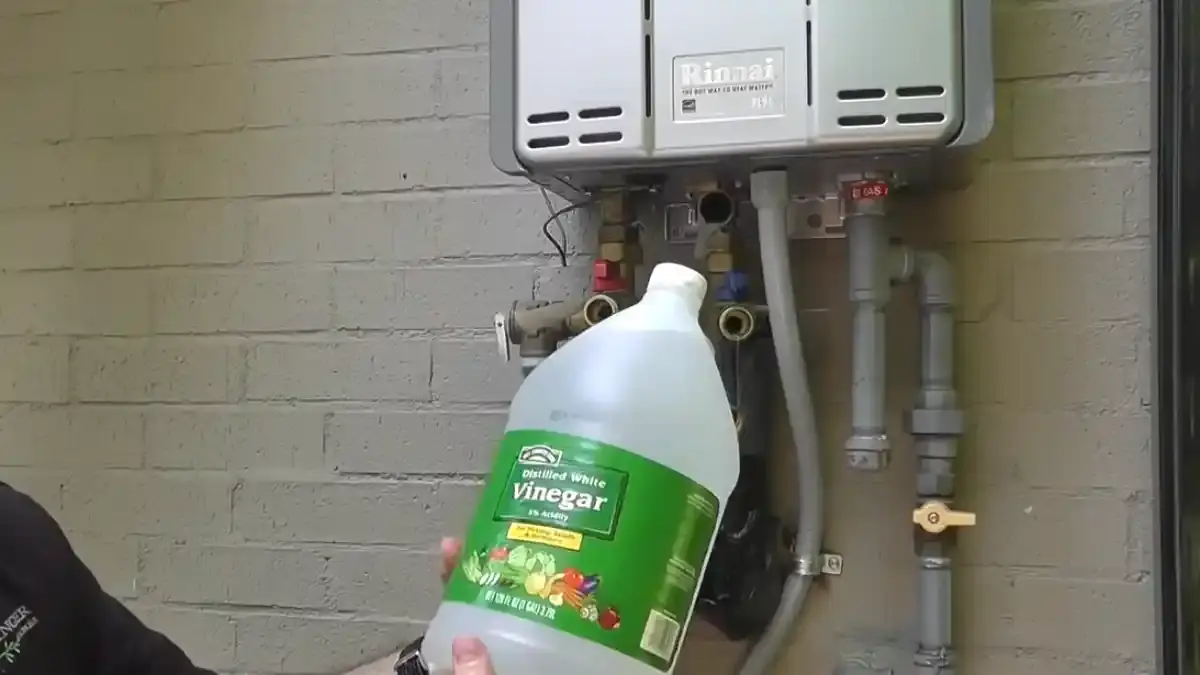
Many manufacturers allow white vinegar. Some require their own solution to keep the warranty. Check your manual.
Does a water softener replace flushing?
It reduces scale a great deal, but a yearly check is still wise.
Is the water hardness different in Lawrence Township?
It can be. Several utilities serve the area. Check the report for the utility on your bill.