What the fill valve does
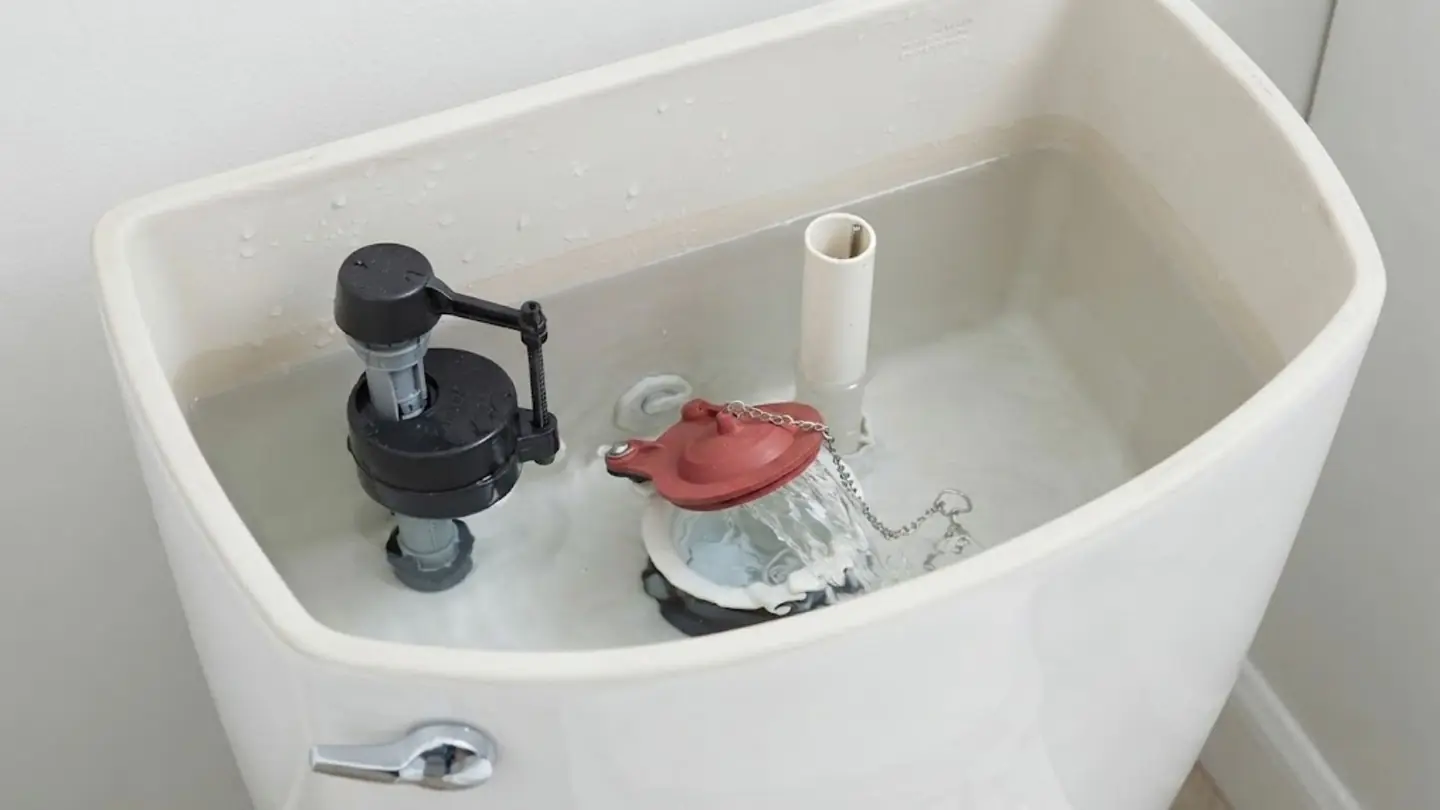
The fill valve sits in the tank and refills it after each flush. A float rises with the water, and when the level is right, the valve shuts off. If the valve or float fails, water keeps running into the tank or into the overflow tube. That wastes water and raises your bill.
The Fluidmaster 400A is a popular universal valve. It fits many toilets and is the part many people think of when a toilet runs. It is not always the right part, so it helps to confirm the cause first.
Is the fill valve the problem
| Symptom | Likely part |
|---|---|
| Water runs into the overflow tube | Fill valve or float set too high. |
| Hissing after the tank is full | Worn fill valve seal. |
| Tank refills very slowly | Clogged fill valve or partly closed shutoff. |
| Toilet runs in short bursts every few minutes | Flapper leaking, not the fill valve. |
| Water at the base of the tank | Tank bolt gaskets or the supply line. |
A quick test helps. Put a few drops of food coloring in the tank and wait. If color shows in the bowl without a flush, the flapper leaks. If the tank is full and water keeps running into the overflow, the fill valve is at fault.
Replacing the valve, step by step
- Shut off the water. Close the supply valve and flush to empty the tank.
- Disconnect. Unscrew the supply line from the bottom of the valve and the locknut under the tank.
- Remove and compare. Take out the old valve and match the height to the new one.
- Install. Set the new valve, adjust the height and hand-tighten the locknut.
- Reconnect and test. Reconnect the supply, set the water level and flush several times, watching for leaks.
Do not overtighten the plastic fittings, because a cracked tank is a bigger repair than the one you started with.
Toilet still running? Call the 24/7 line.
Call (609) 547-1417Common mistakes
- Setting the valve too tall, so the water rises into the overflow tube.
- Overtightening the locknut and cracking the tank.
- Forgetting to flush the supply line to clear debris before connecting.
- Using an old, brittle supply line with a new valve.
- Replacing the valve when the flapper is the real problem.
If your toilet is old, a worn flapper and a worn valve often go together. Replacing both is common.
When to call a plumber
A fill valve swap is a classic first repair. If the shutoff valve will not close, the tank is cracked or the supply line is corroded, call a plumber. Our toilet repair page covers what we do, and our faucet and valve repair page covers stuck shutoffs.
Setting the water level correctly
The water level in the tank should sit about an inch below the top of the overflow tube. Too high, and water spills into the tube and the toilet runs. Too low, and the flush is weak. Most universal valves have a height adjustment on the shaft and a float adjustment you turn by hand.
After you set the level, flush three or four times and watch the tank refill. The valve should shut off cleanly and the water should stop with no hissing. If it hisses, the seal needs cleaning or the valve is faulty.
Replace the supply line while you are there
The braided supply line is cheap and often neglected. A line that is old, kinked or corroded at the nut can burst and flood a bathroom. If yours is more than a few years old, replace it when you swap the valve.
Check the shutoff valve at the wall too. If it is stiff, leaks around the stem or will not close fully, call a plumber to replace it. A shutoff you cannot trust turns every later repair into a bigger job.
Other parts you may need in the tank
A fill valve rarely wears alone. The flapper, the chain and the tank-to-bowl gaskets age at about the same rate, and a toilet with a new fill valve and an old flapper can still run. If you are already in the tank, check these parts and replace what looks worn.
- Flapper: if it is stiff, warped or slimy, replace it.
- Chain: it should have a little slack and not catch under the flapper.
- Tank bolts and rubber washers: replace them if you see rust or a leak beneath the tank.
- Tank-to-bowl gasket: replace it if the tank has ever leaked at the bowl joint.
- Supply line: replace it if it is older than a few years.
Buy parts that match your toilet's brand and flush valve size. A universal flapper does not always seal on every flush valve. If you are unsure, take the old part to the store or send us a photo.
Trenton Water Works reported moderately hard water at 83.2 parts per million in its 2021 data. Mineral scale collects on fill valve seals and floats, and a valve that sticks or hisses can be coated in it. Rinsing the part during replacement helps.
The same report lists free chlorine as the disinfectant at a 2021 residual average of 0.82 parts per million. Chlorine can slowly wear rubber parts such as flappers, so these small parts do not last forever.
TWW also advises flushing taps for two to three minutes after water has sat for hours. In a house left empty for a while, run each toilet through a flush or two to move fresh water through.
Source note: figures above are according to Trenton Water Works 2022 Consumer Confidence Report (2021 data).
Need a plumber near you?
Our plumbers work from Trenton and also serve Lawrence Township and the nearby towns listed on our service area page. If this guide matches what you are seeing, our toilet repair page explains what a visit involves. A dispatcher answers the 24/7 line at any hour, and same-day appointments are offered when a plumber is available.
Ready to talk to a plumber? Call the 24/7 line.
Call (609) 547-1417Questions Trenton homeowners ask
Will a Fluidmaster 400A fit my toilet?
It fits many toilets, but not all. Check the tank height and the fill valve type before buying. A plumber can confirm.
Why does my toilet run every few minutes?
A leaking flapper is the usual cause. It lets water slip into the bowl, and the tank refills in short bursts.
How long does a fill valve last?
Many last several years. Scale and chlorine wear them over time.
Does hard water shorten the life of toilet parts in Trenton?
Scale can foul fill valves. Trenton Water Works reported moderately hard water, so occasional cleaning helps.
Can a running toilet raise my water bill?
Yes. A toilet that runs steadily can waste a lot of water. See our leak detection page for the meter test.